Interbrand Logo

Interbrand Best Global Brands Methodology

This annual report on brand valuation represents Interbrand’s integrated approach to brand management. It gives full consideration to the human truths a brand must address, how the brand designs experiences, and the way it engineers financial performance.

There are three key components to all valuations: an analysis of the financial performance of the branded products or services, of the role the brand plays in purchase decisions, and of the brand’s competitive strength.

How brands qualify

To be included in the Best Global Brands list, brands must meet these criteria.

These requirements — that a brand be global, profitable, visible, and relatively transparent with financial results — explain the exclusion of some well-known brands that might otherwise be expected to appear in the ranking.

As a leader in brand measurement and valuation, Interbrand periodically reviews its frameworks and methodologies to ensure they continue to reflect how valuable brands are built and managed.

All brands are valued using the Interbrand Brand Valuation Framework.

01

Revenue

A substantial percent of revenue must come from outside of the brand’s home region.

02

Presence

The brand must have geographic coverage in emerging markets.

03

Public

There must be sufficient publicly available data on the brand’s financial performance.

04

Profit

Economic profit must be expected to be positive over the longer term.

05

Awareness

The brand must have sufficient global awareness.

06

Brand Strength

The brand’s Brand Strength Score must be equal to 50 or above.
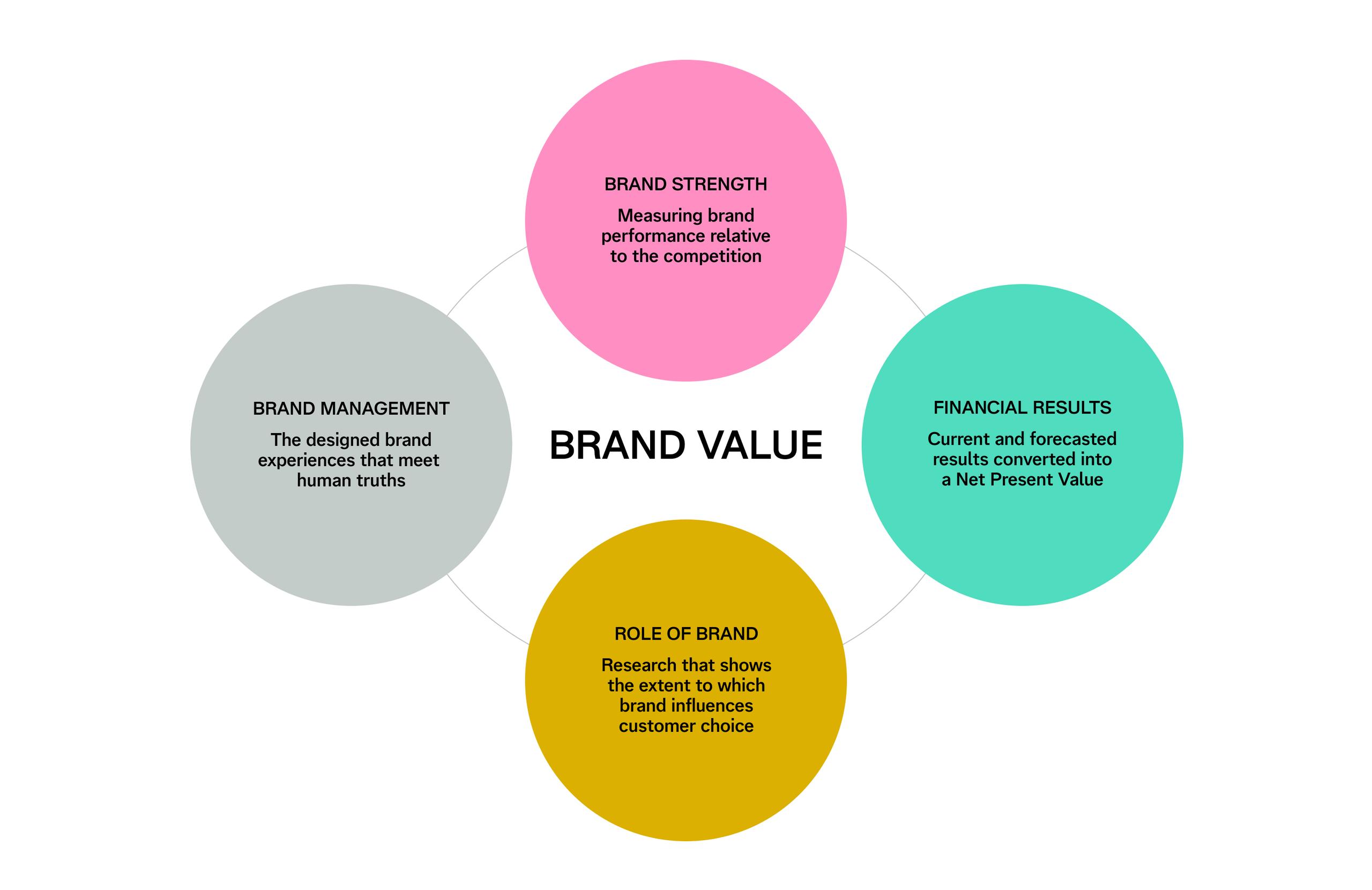
Diagram centered on 'Brand Value' surrounded by four connected colored circles detailing its core components: Brand Management (Left): 'The designed brand experiences that meet human truths' Brand Strength (Top): 'Measuring brand performance relative to the competition' Financial Results (Right): 'Current and forecasted results converted into a Net Present Value' Role of Brand (Bottom): 'Research that shows the extent to which brand influences customer choice'

Methodology

Having pioneered brand valuation in 1988, we have a deep understanding of the impact a strong brand has on the stakeholders that influence the growth of your business: customers, employees, and investors.

Strong brands influence customer choice and create loyalty; attract, retain, and motivate talent; and lower the cost of financing. Our brand valuation methodology has been specifically designed to take all of these factors into account.

Interbrand was the first company to have its methodology certified as compliant with the requirements of ISO 10668 (requirements for monetary brand valuation) and played a key role in the development of the standard itself.

There are three key components to all valuations: an analysis of the financial performance of the branded products or services, of the role the brand plays in purchase decisions, and of the brand’s competitive strength.

Financial Analysis
Role of Brand
Brand strength
This measures the overall financial return to an organization’s investors, or its economic profit. Economic profit is the after-tax operating profit of the brand, minus a charge for the capital used to generate the brand’s revenue and margins.

This measures the portion of the purchase decision attributable to the brand as opposed to other factors such as price, convenience, or product features. The Role of Brand Index (RBI) quantifies this as a percentage. RBI determinations derive from one of three methods: commissioned market research, benchmarking against Role of Brand scores from client projects in the same industry, or expert panel assessment.

Brand Strength measures the ability of the brand to create loyalty and, therefore, sustainable demand and profit into the future. It is based on an evaluation across 10 factors that constitute a strong brand, judged relative to other brands in the industry and to other world-class brands. The analysis delivers a snapshot of strengths and weaknesses and a road map to grow the brand’s strength and value.

Applications

Interbrand’s brand valuation framework is used in four ways:

Measurement system
Generate and organize brand performance data consistently year-over-year.

Diagnostic tool
Pinpoint key challenges around the brand and business.

Business outcomes
Quantify the financial significance of the brand to the business.

Prescriptive framework
Address problems, guide strategy and correct course.


More thinking from interbrand